Showing posts with label Summative. Show all posts

Monday, 11 April 2016

Unit 3: Lesson 6 (April 11)

Credibility of Sources

With a partner, look at the articles that you collected for homework and assess their credibility based on the information below. Keep this in mind as you are developing your research portfolio.


Examples of sources that are often the most credible:

      Official government websites
      Institutional sites that represent universities, regulatory agencies, governing bodies, and respected organizations with specific expertise (e.g., the Mayo Clinic)
      Peer-reviewed journals
      Reputable news sources

Examples of sources that are often considered less credible:

      Blogs
      Web forums
      Individual or business websites
      Materials published by an entity that may have an ulterior motive


Factors to consider
Least reliable
Possibly reliable
Most reliable
Type of source
Unfamiliar website
Published material
Official websites, institutional sites, academic journals
Author’s background
Uncredited
Educated on topic
Expert in the field
Date published
None
Outdated
Recently revised
Depth of review
Controversial reviews
Good public response; general approval
Peer-reviewed by reliable sources
Sources cited
None
Credible sources
Citations referencing other well-cited works
Objectivity
Clearly biased
Sponsored source
Balanced, neutral


CLASS REVIEW: Research Rubric


Work on Research portfolio. Make sure that you have completed the reflection of skills and developing a research questions sections of the Summative Proposal. This will be discussed at the individual writing conferences this week. 


H/W- Work on research portfolio. Make sure that you are demonstrating questioning and showing your insights and connections. 

Thursday, 7 April 2016

Unit 3: Lesson 5 (April 7)

That's debatable.... 

It is now time to start thinking about the summative task. A good argumentative essay is based on a clear thesis and supported by detailed research. Before you can begin writing, you need to identify a topic of interest.

BRAINSTORM: Gender, Identity and Worth in Sport

  • Spend 10 mins looking at the flipboard on 'Gender, worth and Identity in Sport'. 
  • Generate a list of all potential topics for the summative task. 
  • Share with your table group and generate a detailed list. 


Developing a research question

Each table will select a topic of interest

1) Generate a list of possible questions about the topic- be creative, jot-down all ideas- there are NO bad questions at this point.

2) Select 3 of the most promising questions (should be debatable and interesting). Complete the checklist below for each question.

  • Is the scope of your question appropriate: not too wide, not too narrow?
  • Is it manageable within the time constraints allowed? (2 research periods; 1 planning period; 2 writing periods)
  • Will the answer fit word requirements of the assignment? (2-3 pages)
  • Can you find sufficient and timely information in the library?
  • Will Internet, Web, and field research produce more source material?
  • Is your question simple enough to seek just one answer, not several?
  • Is it specific enough that your audience will understand your objective?
  • Will the results be interesting? Does it concern a real and debatable issue?
  • Does your question really interest you? Do you honestly crave the answer?

  • 3) Refine your questions based on your answers above. Be ready to share your research questions with the class.


    Summative Argument Proposal

    Start working on your summative proposal (in drop). By next class, you need to have a clear research question and two annotated articles in your research portfolio (articles must look at different sides of the question).

    H/W: By next class, you need to have a clear research question and two annotated articles in your research portfolio (articles must look at different sides of the question).  

    Thursday, 3 March 2016

    Unit 2: Lesson 5 (March 3)

    Summative TED Talk

    Lit Circle #3: Share TED Talk info from H/W. What was your talk about? What insights or questions do you have?  What connections/further reading have you found? 

    With a partner, look at the Research Rubric and see where you would place yourself for 'questioning and investigating' and 'analysis of evidence'. 

    Creating research portfolios: Research Portfolio Examples

    What makes a great TED talk?

    Discuss Murakami's advice on public speaking (pg 101)


    What makes a great Ted-Talk?- read the TED commandments

    Summative Task Proposal/Research portfolio (in drop)

    • What ideas do you have about lessons that sport teaches us about life? 
    • Review feedback/video from the formative and set improvement goals for the summative task. 
    • Begin preparing for your summative task (research portfolio).


    H/W- ‘What I talk about…’ Read chapters 8-9. Reader’s Journal- Choose one of Murakami’s lessons that you think you could learn from. Write a detailed reflection explaining how this lesson could be applied to your own life.

    Tuesday, 1 March 2016

    Unit 2: Lesson 4 (Feb 29)

    Formative Presentations

    Formative Assessment: Cheating in Sport

    Today you will give your 2 min presentation on cheating in sport. I will give you feedback on the rubric below.


    Exemplary
    Meets
    Approaches
    Area of Concern
    Claim & Development

    Presents information, findings and supporting evidence, using a distinct, compelling and/or memorable perspective,
    such that listeners can follow the line of reasoning; alternative or opposing perspectives are anticipated, addressed and countered
    Presents information, findings and supporting evidence, conveying a distinct perspective, such that listeners can follow the line of reasoning; alternative or opposing perspectives are addressed
    Presents information, findings and supporting evidence, clearly, concisely and logically, such that listeners can follow the line of reasoning
    Presents information, findings and supporting evidence, but is not clear, concise, and/or logical - hard for the listeners to follow the line of reasoning.  
    Organization
    Organizational structure includes an effective introduction and thought-provoking conclusion; sequences ideas strategically; uses subtle transitions to link sections
    Organizational structure includes an effective introduction and conclusion; logical sequencing of ideas with a line of reasoning that is easy to follow; transitions to link sections
    Organization structure includes an introduction and conclusion; sequencing of ideas is difficult at times to follow; transitions missing or formulaic.

    Attempts a structure and organization to support the position. Organizational structure may be missing an introduction and/or conclusion; ideas hard to follow; no transitions between points.
    Style & Delivery
    Subtle, sophisticated confident/charismatic delivery that is clearly articulated with variation in pitch, tone, volume; maintains eye contact and avoids reading from notes; uses pauses, emphasis, facial expressions, gestures as appropriate and for effect and avoids distracting behaviors; shows appropriate use of conventions (e.g. avoids verbalized pauses)
    Delivery is clearly articulated, demonstrating a variation in pitch, tone, volume; maintains eye contact; avoids reading from notes; uses pauses, emphasis, facial expressions, gestures as appropriate and for effect; and avoids distracting behaviors; shows appropriate use of conventions (e.g. avoids verbalized pauses)
    Delivery attempts a clear articulation and variation in pitch, tone, volume; does not maintain eye contact and/or reads too much from notes; attempts to use pauses, emphasis, facial expressions, gestures, but not appropriately for effect; demonstrates some distracting behaviors; attempts appropriate use of conventions, but has some verbalized pauses
    Delivery lacks awareness of/does not attempt to use delivery strategies; lacks articulation and variation in pitch, tone, volume; no eye contact due to reading from notes; no pauses, emphasis, facial expressions, gestures; distracting behaviors; excessive verbalized pauses


    Summative Task: 

    You will create a TED Talk around the theme of what sport teaches us about life. You may build upon one or more of the ideas we discuss in class or suggest your own idea. It is your responsibility to formulate a question/topic for your talk and present a 3-5 minute speech about it. 

    Presentations will be due 15th/17th of March.


    TED Talks are about ‘ideas worth spreading’ so your presentation should focus on a new idea or present an interesting angle on an old idea. You will research your topic in detail (recording your sources using Flipboard or in a research portfolio). You have a large amount of creative freedom in your presentation, but you must include some type of visual aid/presentation tool (Prezi, Keynote, PowerPoint, etc). Your visual aid is meant to enhance audience understanding of your ideas and add interest for the audience.

    You will be assessed during your TED Talk for:
    1. A compelling argument/thesis
    2. Showing both your arguments and a counterargument
    3. Effective introduction, transitions, and thought-provoking conclusion
    4. Delivery should be confident, use vocalization and nonverbals
    5. Use digital media to engage the audience

    Your TED Talk will be assessed on the Presentation Rubric and  Research Rubric.

    (Review as a class)
    H/W: What I talk about…’ Chapter 5-7. Reader’s journal- Identify one idea that you could research further (e.g. mind/body connection-use of visualisation).  Find a TED talk (or another type of speech) that explores the idea further. Using your research skills, provide a summary of talk and provide your insights.


    Monday, 22 February 2016

    Unit 2: Lesson 1 (Feb 22)

    What does sport teach us about life? 

    In this unit, we will be exploring the life lessons that people receive from sport. Our class novel, ‘What I talk about when I talk about running’ by Haruki Murakami, will guide our discussions around the role of competition, the mind/body connection, intrinsic vs extrinsic motivation, goal setting and pushing limits. During this unit you will be assessed on your Presentation skills (20% of semester grade), and your Research/Reading skills (10% of semester grade).


    As you watch this video, think about the lessons that sport teaches about motivation. How can these lessons be applied to other pursuits in life? Generate a list of ideas about this with your table group.


    Summative Task: 

    You will create a TED Talk around the theme of what sport teaches us about life. You may build upon one or more of the ideas we discuss in class or suggest your own idea. It is your responsibility to formulate a question/topic for your talk and present a 3-5 minute speech about it. 

    Presentations will be due 15th/17th of March.


    TED Talks are about ‘ideas worth spreading’ so your presentation should focus on a new idea or present an interesting angle on an old idea. You will research your topic in detail (recording your sources using Flipboard or in a research portfolio). You have a large amount of creative freedom in your presentation, but you must include some type of visual aid/presentation tool (Prezi, Keynote, PowerPoint, etc). Your visual aid is meant to enhance audience understanding of your ideas and add interest for the audience.


    You will be assessed during your TED Talk for:
    1. A compelling argument/thesis
    2. Showing both your arguments and a counterargument
    3. Effective introduction, transitions, and thought-provoking conclusion
    4. Delivery should be confident, use vocalization and nonverbals
    5. Use digital media to engage the audience

    Your TED Talk will be assessed on the Presentation Rubric and  Research Rubric.


    'What I talk about when I talk about running'


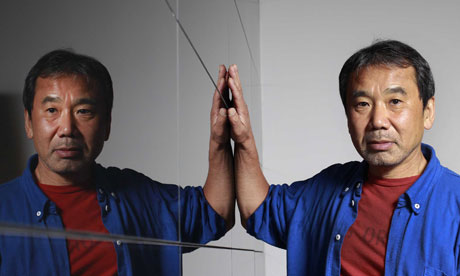
    Haruki Murakami is a contemporary Japanese author. His novels and short stories have won awards worldwide and have been translated into 50 languages.  He is also a serious marathon runner and triathlon enthusiast. He began running at age 33. Over the last 20 years, he has run at least one marathon per year, including an ultramarathon (100k).  


    As we read this book, we will look for ideas related to two things: life lessons and motivation. Let's begin by reading the forward together as a class.


    H/W- Read Chapters 1 & 2 and complete the Reader's Journal (in drop). Please bring a PRINTED copy of your reader's journal for next class. 


    Your responses in the Reader's Journal and your contributions to Lit Circle discussions will be graded using the Research Rubric and added to the your Research/Reading skills (10% of semester grade).


    Wednesday, 3 February 2016

    Unit 1: Lesson 9 (Feb 3)


    Today is a work day for your Summative task. It is due at the end of the lesson on the 10th of Feb. It will be assessed using the Informative Rubric.


    Monday, 1 February 2016

    Unit 1: Lesson 8 (Feb 1)

    Conventions: Writing vs Video

    Form groups based on what type of summative task you are creating (writing or video).

    Look at the examples below and discuss the expected conventions.

    Writing- 'The education of Alex Rodriguez' and IASAS Swimming

    • Sentence structures
    • Punctuation
    • Images
    • Citations 


    Video- Watch 30for30: The deal (first 2.30mins only) and Who is Cam Newton?

    • Use of text
    • Use of music
    • Evidence
    • Segways/transitions 
    • Citations


    Today is a work day for your Summative task. It is due on the 10th of Feb. It will be assessed using the Informative Rubric.

    What makes people great? 
    Create a photojournalism piece covering a person or group of people at SAS. You should choose a person or persons you feel have an interesting story and good personal characteristics, and then uncover what makes them great. You want to get at experiences, but you should also embed facts.  Do a brief video where you do voiceovers and include them telling their stories (3 minutes max) or photojournalistic essay (5 pages max double-spaced with images) about that person which can be published on the “Morning Show” or for the EYE. Think Humans of SAS or a sports journalism piece with a more informative twist. The informative writing or video should demonstrate the characteristics of your subject, and information about the experiences that generate these characteristics.

    I will conference with you today about your FOCUS & EVIDENCE


    Wednesday, 20 January 2016

    Unit 1: Lesson 4 (Jan 20th)

    Is Bobby Knight great? 


    Class shared inquiry on the positive and negative characters of Bobby Knight. Your reading skills will be assessed using the Shared Inquiry Rubric.

    If by Rudyard Kipling (connection on page 497)


    Summative Task: What makes people great? Due Feb 10. 

    Create a photojournalism piece covering a person or group of people at SAS. You should choose a person or persons you feel have an interesting story and good personal characteristics, and then uncover what makes them great. You want to get at experiences, but you should also embed facts.  Do a brief video where you do voiceovers and include them telling their stories (3 minutes max) or photojournalistic essay (5 pages max double-spaced with images) about that person which can be published on the “Morning Show” or for the EYE. Think Humans of SAS or a sports journalism piece with a more informative twist. The informative writing or video should demonstrate the characteristics of your subject, and information about the experiences that generate these characteristics.

    Complete the Summative Proposal (in dropbox)


    Homework

    Answer the following questions:
    • How does rugby reflect the values of NZ?
    • What are the values promoted in rugby?